





Review: HPLC-Based Analytical Methods for the Determination of Mycotoxin Contaminants in Medicinal Plants: A Scoping Review
Gelinsk, M. A.; Trindade, G. A. M.; Fanhani, F. C.; Lazo, R. E. L.; Bertol, G.; Pontarolo, R.; Ferreira, L. M.
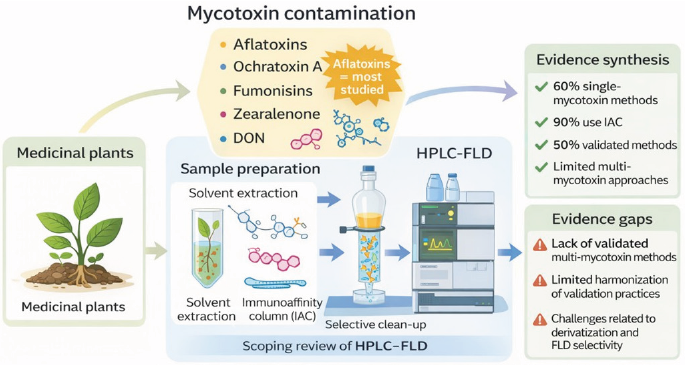
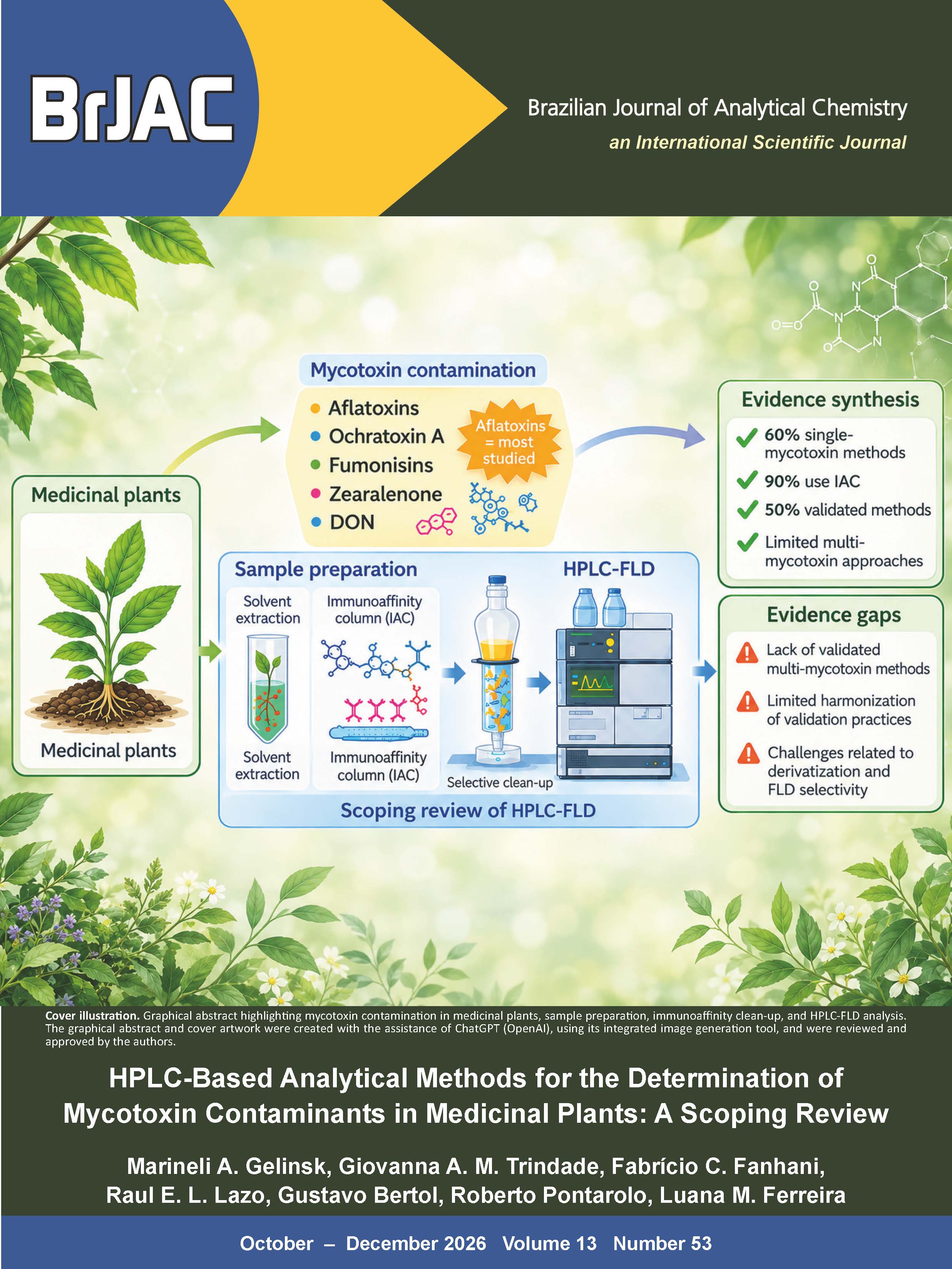
Mycotoxins are toxic substances produced by fungi and can occur in medicinal plants. Among them are aflatoxins, ochratoxins, fumonisins, zearalenone, and deoxynivalenol, which can be quantified by HPLC analysis. The objective of this scoping review was to evaluate HPLC-based analytical methods using fluorescence detection and diode-array detection (HPLC-FLD and HPLC-DAD) for the quantification of mycotoxins in medicinal plants. The study was conducted in accordance with the Joanna Briggs Institute recommendations. 3,939 articles were identified, of which 30 were selected for review. Among the selected papers, 27.6% were published in China, where the use of medicinal plants is common due to Traditional Chinese Medicine. Of the 30 articles, 23 investigated aflatoxins, a group of mycotoxins with the highest health risk. Furthermore, 60% of the publications mention the development of an analytical method for only a single group of mycotoxins, highlighting the difficulty of developing multi-mycotoxin methods with the detector used. Of the articles included in the scoping review, 90% involve solvent extraction followed by immunoaffinity columns. Mobile phases consist mostly of a composition of water, methanol, and acetonitrile in varying proportions. Half of the articles reported performing analytical method validation, with the main parameters evaluated being limit of detection, limit of quantification, precision, and linearity.
Read more