Volume: 10
Issue: 40
Contents:
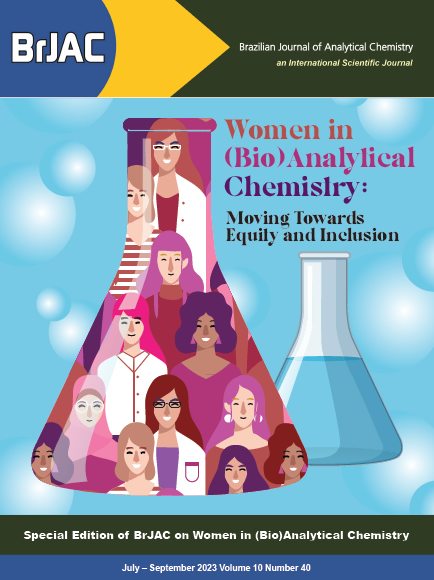
This is a Special Issue titled “Women in (Bio)Analytical Chemistry”. The central idea of this issue is to celebrate those female researchers who have worked hard and dedicatedly in analytical chemistry. The interview was with Dr. Joanna Szpunar from the National Research Council of France. She talked about her career and experience as a prominent researcher in the spectroanalytical chemistry field. The Point of View was with Dr. Maria Valnice B. Zanoni from UNESP, who excels in electroanalytical chemistry and shares a new perspective on artificial photosynthesis technology. The Letter written by Dr. Quezia Cass from UFSCar presented us with text on separation techniques highlighting affinity selection mass spectrometry. The issue also features three reviews, eight articles, and three technical notes, all led by women in (bio)analytical chemistry.

Women in (Bio)Analytical Chemistry: Moving Towards Equity and Inclusion
Prof. Dr. Márcia A. Mesquita S. Veiga
Dept. of Chemistry, University of São Paulo, Ribeirão Preto, SP, Brazil - Guest Editor of this Special Issue
Prof. Dr. Maria das Graças A. Korn
Institute of Chemistry, Federal University of Bahia, BA, Brazil - Guest Editor of this Special Issue
“It is crucial to promote gender equality in chemistry by providing an inclusive environment and encouraging the active participation of women. This can be achieved by implementing policies that promote equal opportunities, encouraging female role models and mentors, supporting women chemists' training and professional development, and valuing and recognizing their contributions.”
Joanna Szpunar, an outstanding chemical researcher in the chemistry of metal-biomolecule interactions, shares her experience as a woman scientist with BrJAC
Dr. Joanna Szpunar
National Research Council of France (CNRS)
“I have had an extraordinary opportunity to be a part of the beginnings of an emerging field of analytical chemistry - speciation analysis. I started at the University of Antwerp where I participated in method development for environmental projects dealing with the long-distance transport of organolead compounds from leaded gasoline and with organotin cycling in the marine environment.”
Artificial Photosynthesis Technology: Is it Possible?
Prof. Dr. Maria Valnice Boldrin Zanoni
Institute of Chemistry and INCT-DATREM, UNESP, Araraquara, SP, Brazil
“…The great challenge is to find ideal semiconductor materials that can be photoexcited when exposed to sunlight, generate electron/hole charge pairs with a low recombination rate, and still present the ability to catalyze water reduction and/or conversion of CO2 into hydrogen and hydrocarbons of economic interest, respectively...”
Affinity Selection Mass Spectrometry (AS-MS) as a
Tool for Prospecting Target Ligands
Dr. Fernando G. Almeida1, Prof. Dr. Quezia B. Cass2
1OMass Therapeutics, Oxford, United Kingdom
2Dept. of Chemistry, Federal University of São Carlos, SP, Brazil
“Unlike most conventional high-throughput screening assays, AS-MS has fewer or no limitations when it comes to target selection. It is important, however, to understand the implications of choosing membrane proteins as targets.”
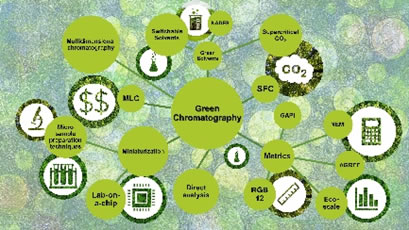
Recent Developments in Green Chromatography
Bianca F. G. Passerine, Márcia C. Breitkreitz
In this paper, strategies for greening methods and recent developments in green chromatography are presented. In addition, metrics for the proper evaluation of these methods are discussed.
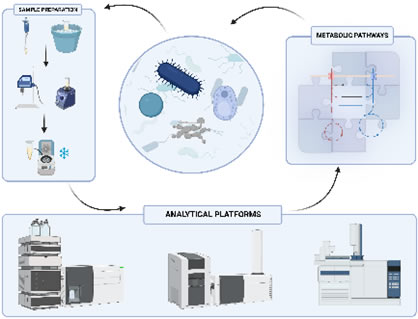
Fundamentals and Analytical Strategies for Metabolomics Workflow: An Overview and Microbial
Applications
Hanna C. de Sá, Emile K. P. dos Santos, Samara C. dos Santos, Rafaela S. Nunes, Gisele A. B. Canuto
This review presents the fundamentals of metabolomics and workflow, focusing on the description of the steps and analytical strategies applied to microbial sample preparation, highlighting the current challenges in sample handling. In addition, the state of the art of analytical technologies based on separation techniques hyphenated to mass spectrometry and applications in microbial metabolomics are presented.
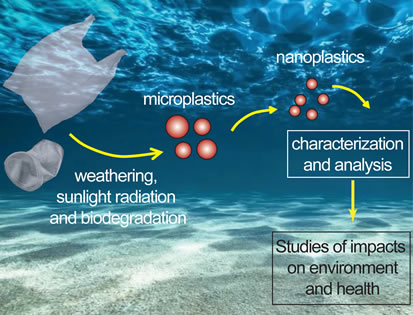
The Emerging of Microplastic and Nanoplastic as Pollutants and their Characterization and
Analysis
Lilian R. R. Souza
This review proposes an integrated approach of methodologies of sampling, sample preparation, and analysis of solid and aqueous samples with microplastics and nanoplastics besides discussing the challenges and new methodologies for microplastics and nanoplastics analysis.
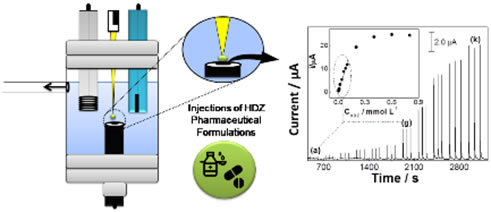
Development of an Electrochemical Sensor Modified with Dealuminated Zeolite with Citric Acid for
Hydroxyzine Determination by Amperometry-BIA
Fabiana S. Felix, Matheus J. F. Bazzana, Letícia C. Assis, Bethania L. Mansur, Sara S. Vieira, Zuy M.
Magriotis, Leonardo L. Okumura, Adelir A. Saczk
The present work aimed to develop an electrochemical sensor modified with dealuminated zeolite with citric acid for the determination of hydroxyzine. During amperometric experiments, this sensor modified with zeolite was associated with a batch injection analysis configuration for analyses of pharmaceutical samples.
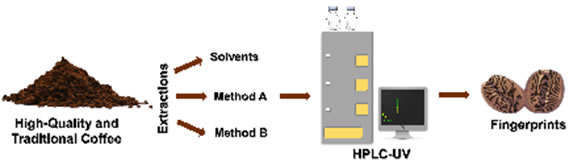
Extraction of Non-Volatile Chemical Compounds in High-Quality and Traditional Coffee
Gabriela M. R. N. de Alcantara, Giovanna B. F. Spíndola, Wanessa R. Melcher Mattos
This exploratory study aims to evaluate the efficacy of different solvents and processes in extracting the characteristic compounds that discriminate high-quality and traditional coffee types using an HPLC method with UV detection.

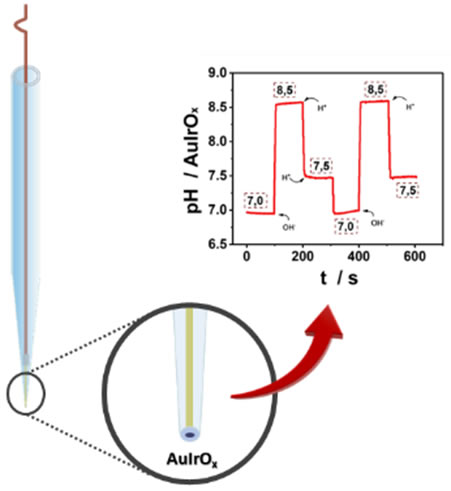
Iridium Oxides Based Potentiometric Sensor for pH Monitoring in Biological Samples
Jessica S. G. Selva, Mauro Bertotti
Our goal in this work was to enhance some features of a microsensor previously fabricated by us aiming at getting more sensitive pH measurements with enhanced stability and short response time. We have demonstrated that such a miniaturized sensor shows favorable sensing performance and can be successfully applied to measure pH in biological samples.

The Importance of Sample Preparation for Omics Analysis: Which Extraction Method is the most Suited
for my Biological Question?
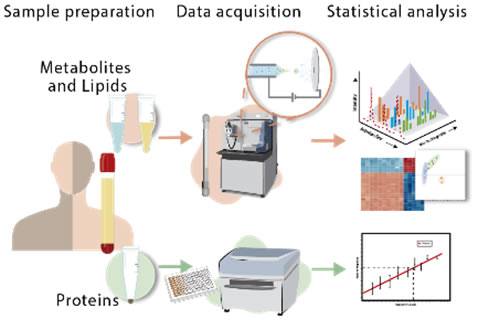
Mariana S. Marques, Patrick C. Ferreira, Thales F. D. Pereira, Alessandra Sussulini
This work presents an evaluation of liquid-liquid extraction protocols for blood serum samples aiming at metabolomics and lipidomics analysis using liquid chromatography coupled to mass spectrometry. The outcomes of this study can assist researchers in selecting the most suitable sample preparation method for their specific research needs.
Multi-Techniques for Iodine Determination and Dose Uniformity Assays in Iodized Mineral Dietary
Supplements
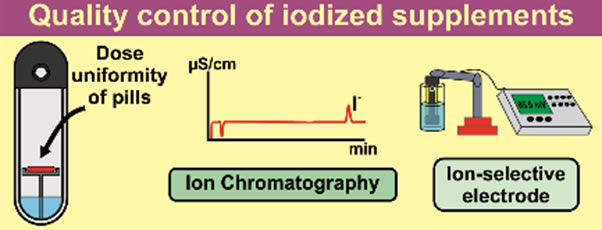
Marcia F. Mesko, Rodrigo M. Pereira, Natalia J. Bielemann, Filipe S. Rondan, Diogo L-R. Novo
In this work, microwave-induced combustion was combined with ion chromatography and ion-selective electrode potentiometry for iodine determination and dose uniformity assays in mineral dietary supplements. The analytical strategies presented in this study can be successfully used in routine analysis of the quality control of mineral dietary supplements.

Bioaccessibility of Ca, Fe, Mg, and Mn in Brazilian Propolis
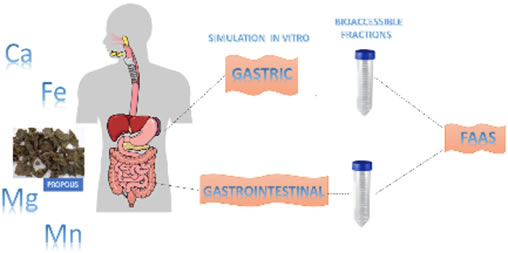
Lana P. B. Pereira, Robson C. M. Brito, Kelly G. F. Dantas
The goal this study was evaluate the bioaccessibility of calcium, iron, magnesium, and manganese in Apis mellifera and Melipona propolis samples by flame atomic absorption spectrometry. The bioaccessibility levels of these inorganic constituents found in propolis by gastric and gastrointestinal simulation showed that these inorganic elements are available for absorption in the body.


Determination of Essential and Non-Essential Elements in Dietary Supplements by Microwave-Induced
Plasma Optical Emission Spectrometry: Method Development and Study of Non-Spectral Interferences
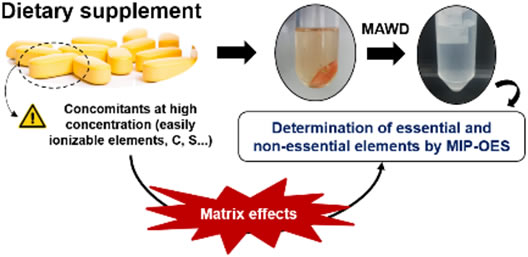
Paola A. Mello, Gustavo R. Bitencourt, Thaís S. Berón, Aline L. H. Müller
The purpose of this work was to evaluate the suitability of MIP OES for the determination of essential and non-essential elements in dietary supplements, aiming a method for the quality control of elements added as a supplier, as well as those present as contaminants. A study of non-spectral interferences was carried out, comprising common concomitant elements present in dietary supplements. Moreover, non-spectral interferences caused by residual HNO3 acidity remained from sample preparation were also investigated.

In vitro Bioaccessibility of Cd, Cu, Fe and Zn in Basil (Ocimum basilicum L. Grecco
a palla) after Cadmium Intoxication
Sofia S. Martins, Giselle V. de Sousa, Vânia L. G. Teles, Letícia M. Costa
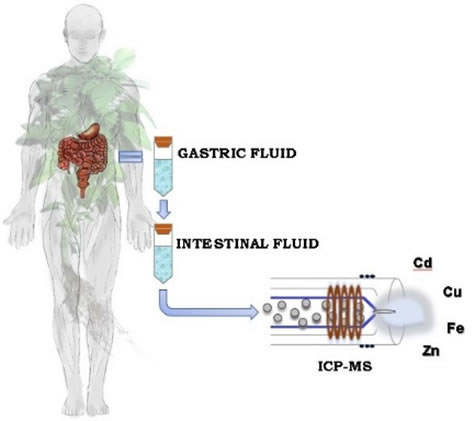
The aim of this study was to investigate the influence of the lyophilized and fresh leaves of basil on the in vitro bioaccessibility of Cd, Cu, Fe and Zn, and the correlations established with Cd and these nutrients. A simulated gastrointestinal digestion was performed to assess the in vitro bioaccessibility of Cd, Cu, Fe and Zn in basil samples after Cd intoxication.

Development and Validation of a High Performance Liquid Chromatography Ultraviolet Detection Method
for the Quantitative Determination of Vancomycin Hydrochloride
Priscilla S. C. Onofre, Daniele P. Barros, Gabriela T. S. Silva, Fernando L. A. Fonseca, Paulo C. P. Rosa,
Mavilde L. G. Pedreira, Maria Angélica S. Peterlini
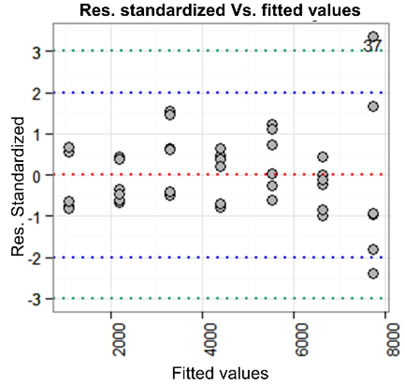
The objective of this study was to develop and validate an analytical methodology by HPLC-UV to determine vancomycin hydrochloride content by assessing the parameters of selectivity, linearity, working range, matrix effect, robustness, precision, and accuracy. The method has been shown to be selective, free from mobile phase interference, diluent and other substances on vancomycin hydrochloride retention time.
Lanthanum Oxide Nanoparticles Distribution in Wistar Rats after Oral Exposure and Respective
Effects
Graciela M. Heidrich, Vinicius M. Neves, Naiara Stefanello, Vanessa V. Miron, Thauan F. Lopes, Sindy R.
Krzyzaniak, Paola de A. Mello, Maria R. C. Schetinger, Dirce Pozebon, Valderi L. Dressler
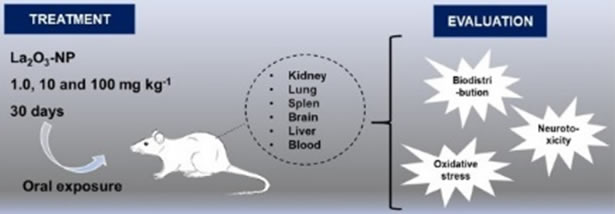
Despite the wide application of La2O3-NPs, little is known about their effects on animals. Therefore, the effect and distribution of La2O3-NPs in Wistar rats were studied in the present work. To this end, alanine aminotransferase, aspartate transaminase and gamma-glutamyl transferase activities, uric acid, creatinine, antioxidant enzymes and superoxide dismutase, protein oxidation, reactive oxygen species and neurotoxicity were evaluated. Absorption of La2O3-NPs was evaluated through La determination in kidney, spleen, brain, pancreas, lung, and blood.
Optimization of the Protein Sequential Extraction for Quantitative Determination of Albumins,
Globulins, Prolamins and Glutelins in Edible Mushrooms
Saphire S. L. Dias, Aline P. de Oliveira, Ivanise Gaubeur, Cassiana S. Nomura, Juliana Naozuka
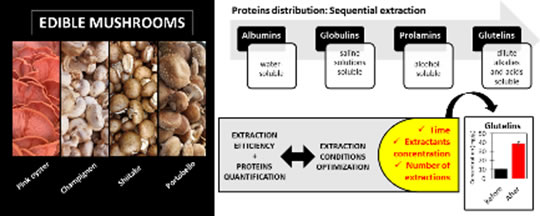
The aims of this work were to evaluate the protein distribution in edible mushrooms and to optimize the sequential protein extraction procedure to obtain the total concentration of albumin, globulin, prolamin and glutelin in edible mushrooms, evidencing the need to carry out extraction procedures until exhaustion to adequately attribute nutritional value to edible mushrooms (pink oyster, shiitake, portobello and champignon).
Pittcon 2023: Philadelphia hosted the first in-person Pittcon post-COVID-19 pandemic
After a three-year hiatus due to the COVID-19 pandemic, Pittcon was held in Philadelphia March 18-22, 2023 at the Pennsylvania Convention Center. Pittcon 2023 promoted scientific accomplishments by showcasing knowledge that will impact, enrich, and inspire the future of science. The event also offered many employment and networking opportunities, and social events for scientists to enjoy.
Total elemental analysis in clinical research using the Thermo Scientific iCAP TQ ICP-MS
Tomoko Vincent
This technical note focuses on the development of a robust method for the analysis of titanium and other trace elements in human serum reference materials using the Thermo Scientific™ iCAP™ TQ ICP-MS.
Determination of iodide in multivitamin-mineral supplements using ion chromatography
Hua Yang and Jeffrey Rohrer
The goal of this study was to develop a method for the determination of iodide in multivitamins using an ion chromatography (IC) system with a Thermo Scientific™ Dionex™ IonPac™ AS20 column and electrochemical detection.
Simultaneous Digestion of Food Samples for Trace Element Analysis
Milestone
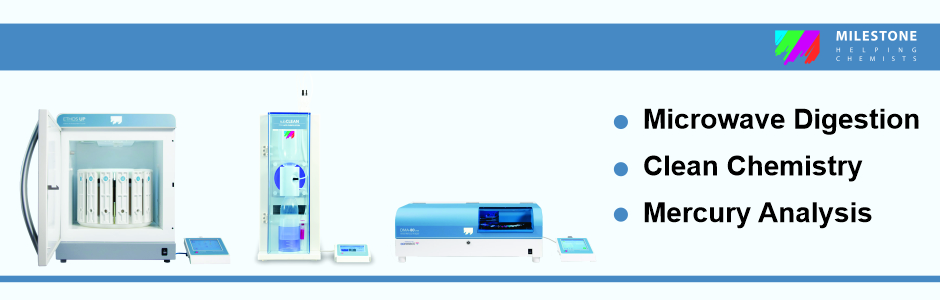
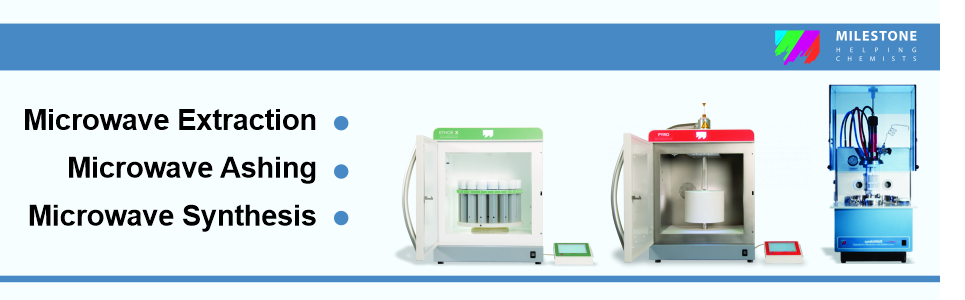
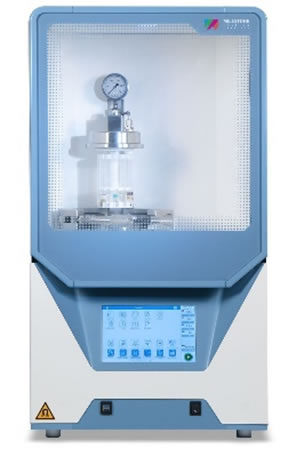
Milestone’s innovative ultraWAVE with Single Reaction Chamber technology further improves upon closed-vessel microwave digestion, by simplifying the sample preparation step, and providing fast, easy, effective, and the highest quality digestions of any food matrix with a single digestion method.
Redefining ICP-MS Triple Quadrupole Technology with Unique Ease of Use
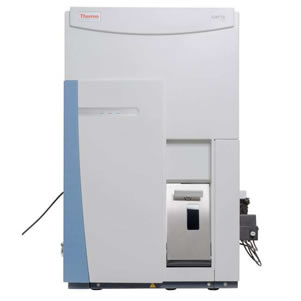
Empowering you with technology to achieve more today and be ready to master future challenges tomorrow, the Thermo Scientific iCAP TQ ICP-MS helps futureproof your laboratory against evolving legislation requirements, enables you to explore developing markets, and pushes the boundaries of your research.
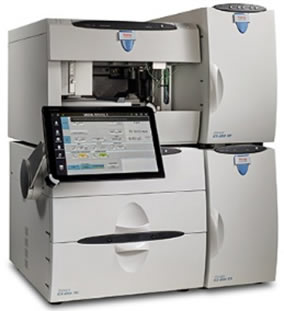
Dionex™ ICS-6000 Standard Bore and Microbore HPIC™ Systems
Get significant increases in resolution and throughput using the world's first modular ion chromatography (IC) system capable of operation up to 5000 psi. A highly flexible ion chromatography system provides you with the freedom to develop, explore, and run different methods simultaneously.
ultraWAVE 3 Taking Productivity and Performance to New Heights
The new ultraWAVE 3 is the latest generation of SRC technology that further elevates the value of this technology for elemental analysis in terms of performance, time, workflow, and cost of ownership.
Pittcon Conference & Expo
Pittcon is a friendly, welcoming environment where analytical chemists at all professional levels meet. Pittcon is a platform for sharing ideas and cooperating to form new ones. At Pittcon, you will find that spark that drives your research, your career, and above all, your scientific perspective forward.
SelectScience® Pioneers online Communication and Promotes Scientific Success
SelectScience® informs through trusted lab product reviews, virtual events, thought-leading webinars, features on hot scientific topics, eBooks and more, independent online publisher SelectScience® provides scientists across the world with vital information about the best products and techniques to use in their work.
CHROMacademy is the leading provider of eLearning for analytical science
For over 10 years, CHROMacademy has increased knowledge, efficiency and productivity across all applications of chromatography.